Orientation & Quaternions
Why every drone, spacecraft, and VR headset secretly thinks in four dimensions
Telling a robot where it is takes three honest numbers: , , . Telling it which way it is facing should be just as easy.
It is not. Orientation in 3D is one of the genuinely treacherous corners of robotics, and the way out runs through a number system a mathematician once carved into a bridge.
In the last chapter we split pose into translation and rotation, and promised that rotation was the subtle half. Here is where that bill comes due. Position lives on a flat, well-behaved space: three sliders, no surprises. Orientation lives somewhere curved and stranger, and the most natural way to describe it hides a trap that has crashed real aircraft and confused real spacecraft. So before any algebra, let’s go break it on purpose.
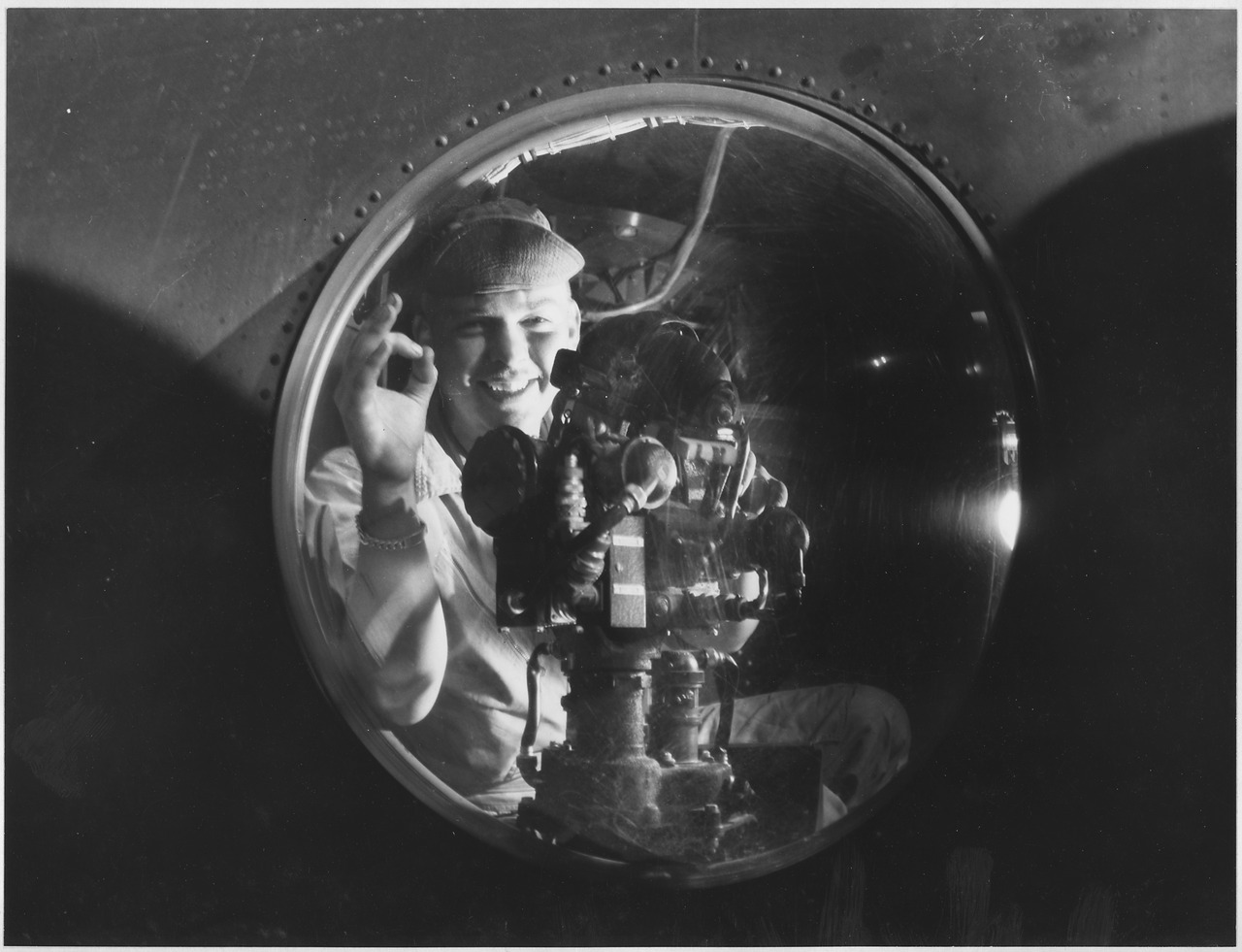
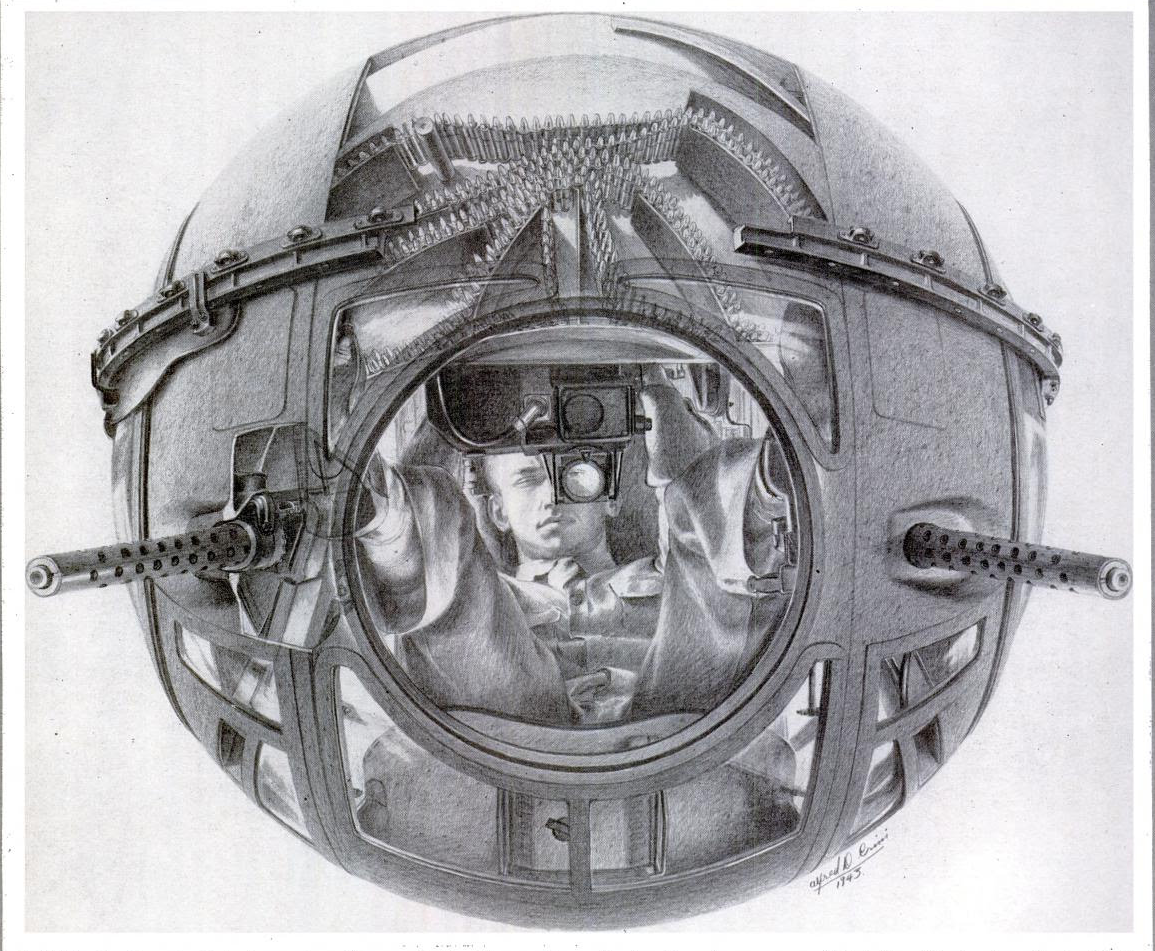
Fly it yourself. You are sitting behind the plane, chase-camera style, looking forward along its nose. The three sliders are yaw (swing the nose left/right), pitch (tip the nose up/down), and roll (bank the wings like a barrel). Together they’re called Euler angles, and they feel completely intuitive, exactly how a pilot or a video-game camera describes its attitude. Drag the plane directly to fly it, or work the sliders. Now do this: drag pitch all the way to +90° (point the nose straight at the deck) and then wiggle yaw and roll. Watch the warning fire. Two of your three control axes have collapsed onto each other: yaw and roll now do the same thing, and one whole direction of rotation has silently vanished. This is the rotation the bomber gunner was fighting: a body free to point any direction at all, described by three angles that quietly betray you at the worst moment.
Euler angles, and the trap inside them
Three angles, applied in order (say yaw, then pitch, then roll), can point a rigid body any direction you like. That is why they’re everywhere: they read like plain English and you can sketch them on a napkin.
The trouble is that the second rotation can swing the third axis directly on top of the first. When pitch hits ±90°, the yaw axis and the roll axis become parallel. Now turning the yaw dial and turning the roll dial produce the identical motion, and there is no combination of the three that gives you the rotation you actually lost. Three knobs, but only two independent things to turn. This collapse is called gimbal lock, and it is not a bug in the simulator. It is baked into the mathematics of describing 3D rotation with three sequential angles.
Those software guards were blunt instruments. The Apollo computer flashed a “gimbal lock” warning at 70 degrees of pitch and simply froze the inertial platform at 85 degrees rather than try to whip the gimbals around faster than they could physically move. Once frozen, the crew had to fly clear of the danger zone by hand and then realign the platform from scratch by sighting on known stars. A jammed compass, fixed with a telescope and a star chart.
There’s a second, quieter problem too. Because yaw-pitch-roll are applied in sequence, the order matters and the angles tangle together, so interpolating smoothly from one orientation to another, or adding up a stream of tiny rotations from a gyroscope, becomes fiddly and error-prone. Euler angles are a wonderful way to talk about orientation and a terrible way to compute with it.
The fix from a bridge in Dublin
The escape hatch is a number with four parts instead of three. A quaternion looks like this:
where are ordinary real numbers and are three special imaginary units. If you’ve met complex numbers, a single with , a quaternion is that idea grown three imaginary axes instead of one.
It sounds abstract, and its discovery genuinely felt like a bolt from the blue.
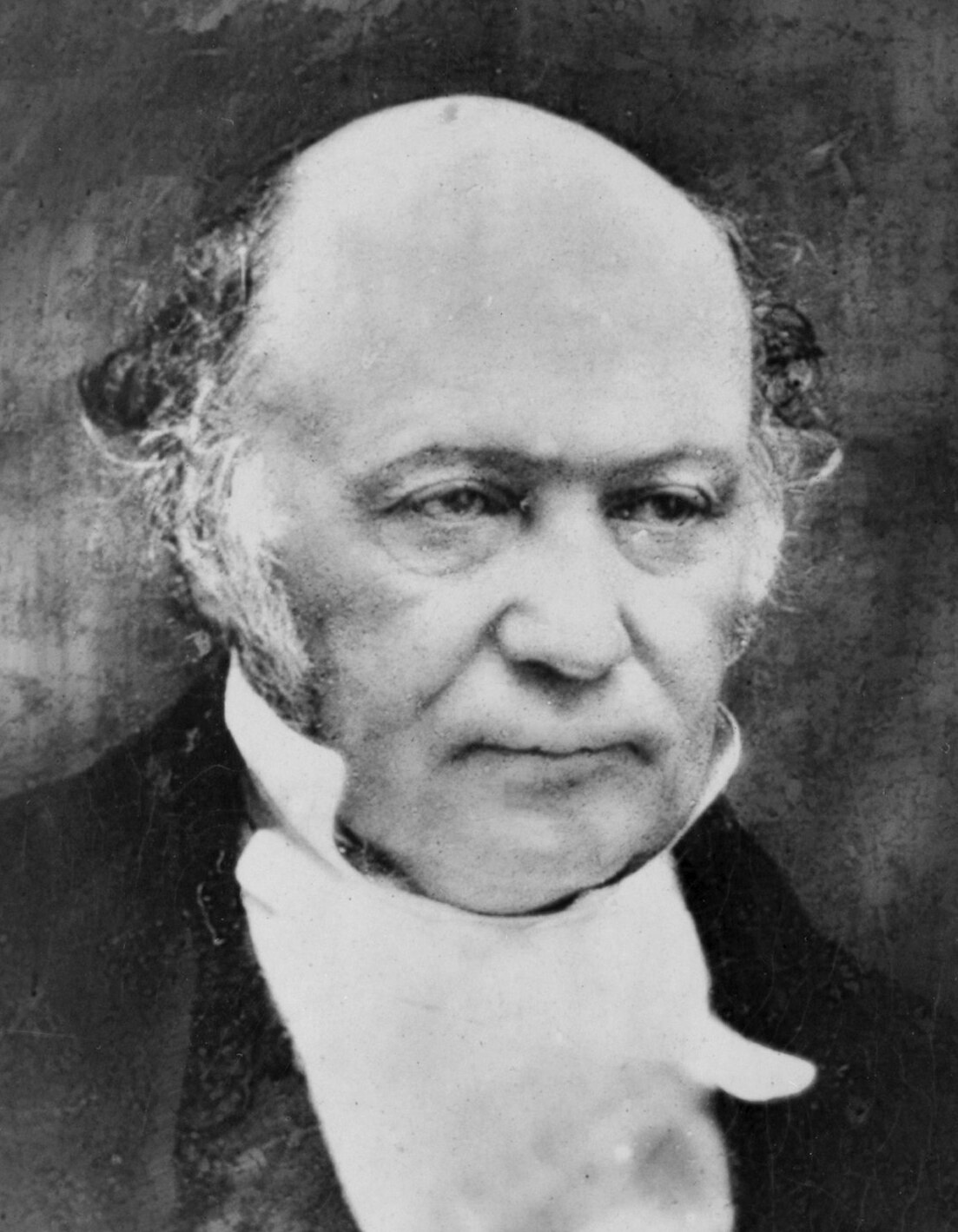
The trick that makes quaternions useful to robotics: a unit quaternion (one whose four numbers satisfy ) encodes exactly one 3D rotation, with no gimbal lock anywhere. Push the orientation any direction you like and nothing ever collapses, because four numbers always have enough room to describe rotation without two axes fighting over the same job.
To actually rotate a vector by a quaternion , you sandwich it:
Wrap the vector between and its inverse and out comes the rotated vector. Chain rotations? Just multiply the quaternions. Tiny gyro update sixty times a second? Multiply in the small quaternion and re-normalize. Smooth, order-stable, cheap.
Back to the plane
Scroll back up to the aircraft and fly it again, but this time read it as a quaternion underneath. Sweep the angles anywhere you like, point the nose straight up, flip it onto its back, roll it inverted. The plane you were just fighting with three angles is the same body a unit quaternion holds effortlessly: four numbers with room to spare, so every attitude is reachable and nothing ever locks. The only reason the warning fired up there is that the sliders are Euler angles. Drive the very same orientation through a quaternion and the collapse never happens, because two of the four numbers can never fuse the way two of three angles can. The intuition the gunner lacked is now just four numbers and a multiply.
The math: quaternion multiplication, conjugates, and SLERP
Quaternion multiplication follows directly from Hamilton’s bridge relation, with the crucial property that (like rotation matrices) it does not commute: in general, exactly as turn-then-step differs from step-then-turn.
For a unit quaternion the inverse is just the conjugate, found by flipping the sign of the imaginary part:
so the rotation sandwich costs no real division. A pure vector enters the formula as the quaternion .
The other headline feature is smooth blending. Given two orientations and and a parameter , SLERP (spherical linear interpolation) walks the shortest arc between them along the unit sphere:
where is the angle between the two quaternions. The result is a constant-rate turn with no wobble and no gimbal lock, which is why SLERP underpins camera moves and character animation in essentially every game engine. (Watch the sign: pick whichever of or is closer to first, or SLERP takes the long way around.)
Where this shows up
You will almost never see a quaternion in a robot’s behavior, because they live underneath everything that turns:
- Drone flight controllers integrate gyroscope readings into an attitude quaternion hundreds of times a second; Euler angles would gimbal-lock the instant the drone flipped past vertical.
- Spacecraft attitude systems track and command orientation as quaternions, precisely so they never blind themselves at an awkward angle the way Apollo’s gimbals could.
- VR headsets report your head’s orientation as a quaternion so the view never snaps or stutters as you look straight up.
- Animation and camera rigs SLERP between quaternions to glide smoothly from one framing to the next.
Euler angles for the human in the loop; quaternions for the machine doing the math. That division of labor is the standard answer in the field.
Key takeaways
- Euler angles (yaw, pitch, roll) are intuitive but suffer gimbal lock: at pitch ±90° two axes align and a degree of freedom disappears.
- A unit quaternion packs orientation into four numbers (, with norm 1) and has no gimbal lock anywhere.
- Quaternions rotate a vector by the sandwich , chain by multiplication, and blend smoothly via SLERP.
- Mind the double cover: and are the same rotation, so compare orientations carefully.
Three numbers felt like enough. They never were. The honest description of which way a body faces needed a fourth dimension that Hamilton found on a walk and could not bear to lose, so he cut it into a bridge.
Every drone that rights itself after a gust, every headset that holds the horizon level while you crane your neck, every spacecraft that turns to face a distant sun without ever going blind, is quietly running on the four numbers from that October afternoon in Dublin.