Nicolas Minorsky
1885-1970
The Russian-American naval engineer who, while teaching a battleship to steer itself, wrote down the math that became the PID controller, the three-term feedback loop that still runs almost everything that holds a course.
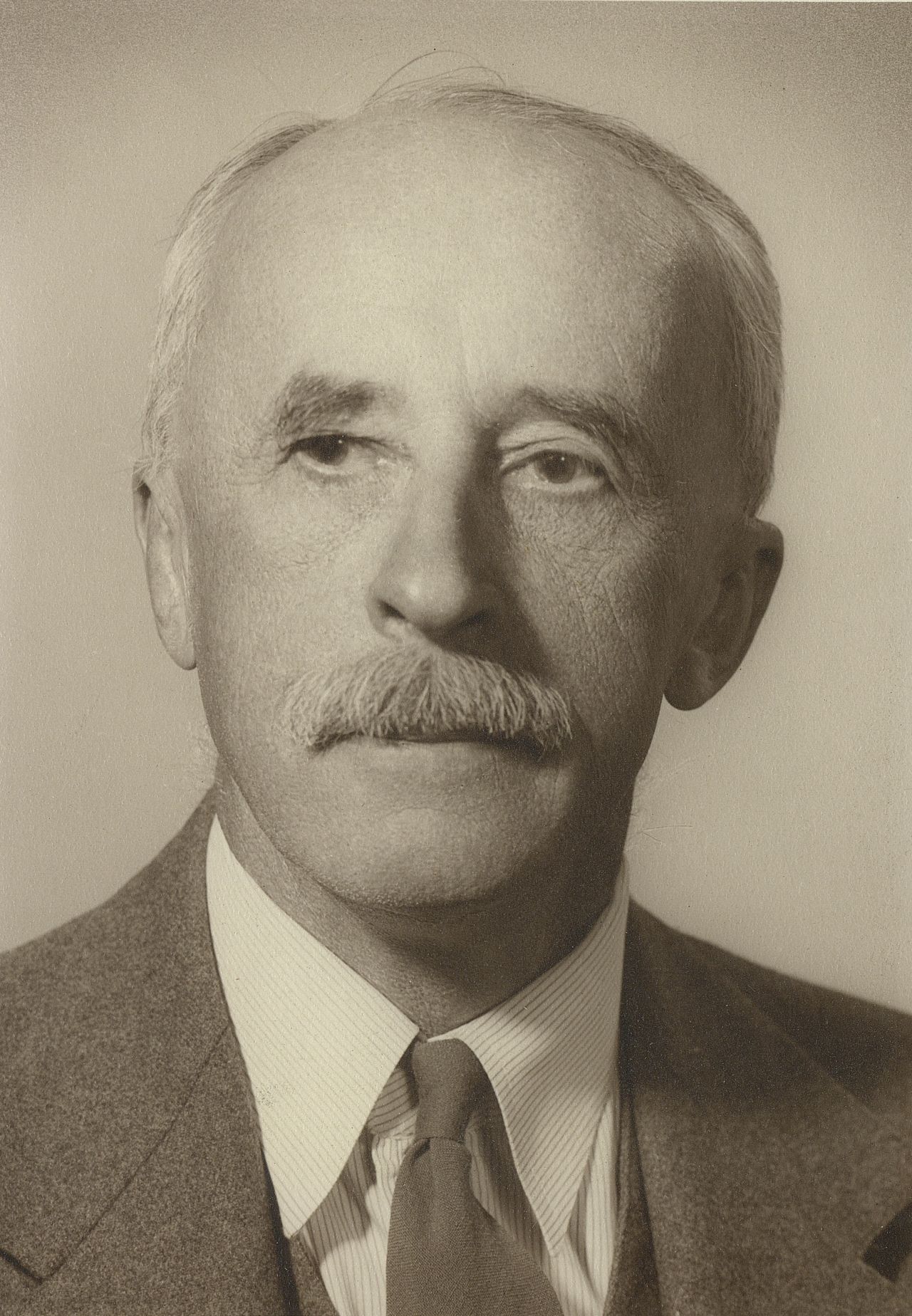
Nikolai Fyodorovich Minorsky was born in 1885 in Korcheva, a Russian town on the upper Volga that no longer exists (it now lies submerged beneath a reservoir). He trained as a naval officer and electrical engineer, studied in St. Petersburg and at the University of Nancy in France, and served as a lieutenant in the Imperial Russian Navy. During the chaos of the Russian Civil War he emigrated to the United States in 1918, where he spent the rest of his career bridging hands-on engineering and deep mathematics.
His headline contribution came from a very practical problem: how do you make a ship steer itself? In 1922, while helping install and test automatic steering on the battleship USS New Mexico, he wrote a paper called 'Directional stability of automatically steered bodies.' In it he laid out the idea of using not just the current heading error, but also its accumulation over time (integral) and its rate of change (derivative) to compute the correction. That is exactly the recipe we now call a PID controller, and his paper is one of the earliest formal treatments of control theory written in English.
Why does this matter for robotics? PID is the workhorse feedback loop at the heart of countless real systems: drone flight stabilization, motor speed control, self-balancing robots, temperature regulation, and the joint controllers in robot arms. The genius is that you do not need a perfect model of the system. You watch the error, react to where it is, where it has been, and where it is heading, and tune three gains until it settles smoothly. Minorsky reasoned this out by studying how a skilled helmsman actually corrected a ship's course, then turned that intuition into equations a machine could follow.
Later in his career Minorsky turned to nonlinear mechanics and the messy oscillations that linear theory cannot capture: rolling ships, self-exciting circuits, relaxation oscillations. He spent years designing active anti-roll stabilization systems for Navy ships, including a 5-ton model later nicknamed the 'USS Minorsky.' He also recognized that crucial work in nonlinear dynamics was being published in the Soviet Union in Russian, unreadable to most American researchers, and he made it his mission to translate and introduce those ideas to the West, an unglamorous act of scholarship that shaped the field.
Fun facts
- Minorsky did not derive PID from abstract theory first. He reverse-engineered it from watching expert helmsmen, noticing that a good one steers harder when the error is growing and eases off as the ship swings back toward course. That human instinct is essentially the derivative term.
- The hometown he was born in, Korcheva, is literally gone: it now sits underwater beneath the Ivankovo Reservoir, flooded by a Soviet-era dam project.
- He kept working until the very end. After retiring to the foothills of the Pyrenees in southern France with his French-born wife, he continued giving seminars and writing theoretical papers right up to his death in 1970, and France's Academy of Sciences awarded him the Montyon Prize in 1955.