Andrey Markov
1856-1922
The Russian mathematician who proved that the future can depend only on the present, inventing the Markov chain that today underlies nearly every robot's ability to estimate where it is and what it will do next.
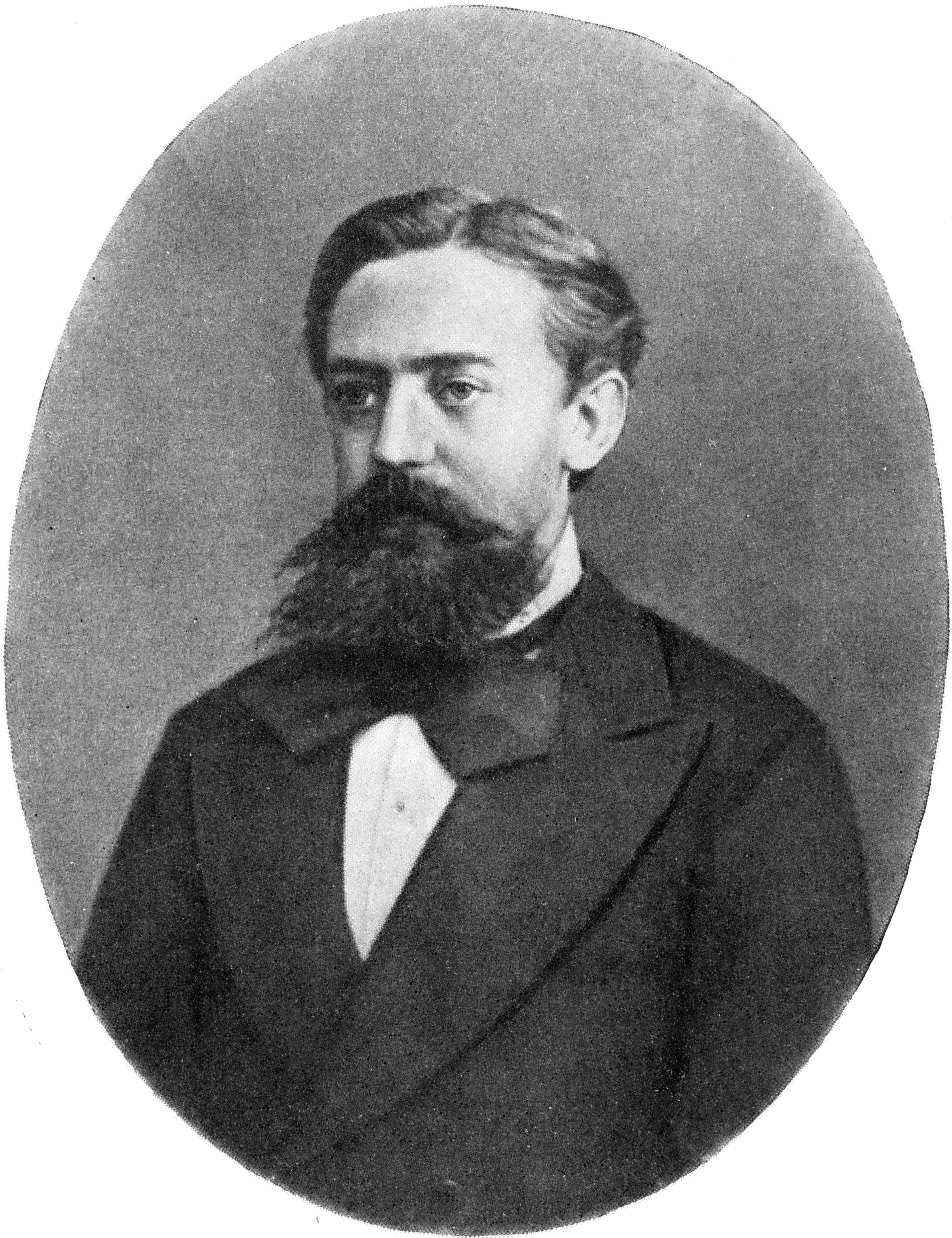
Andrey Markov was born in 1856 in Ryazan, Russia. As a boy at the St. Petersburg Grammar School he was seen as something of a rebel and did poorly in nearly every subject except mathematics, where he clearly shined. He went on to study at Saint Petersburg University under the great Pafnuty Chebyshev, earned a gold medal for an early solution to a differential equations problem, and eventually succeeded Chebyshev as the university's professor of probability theory.
His big idea sounds simple but was revolutionary. Earlier probability theory leaned heavily on the assumption that random events were independent, like separate coin flips. Markov showed you could build rigorous mathematics for sequences of events where each step depends on the one before it. He extended cornerstone results like the law of large numbers and the central limit theorem to these chains of dependent random variables. The key insight, now called the Markov property, is that to predict the next state you only need to know the current state, not the entire history that led there.
To prove his methods worked on real data, in 1913 he counted the vowels and consonants in the first 20,000 letters of Pushkin's novel Eugene Onegin. He stripped away all meaning and poetry, treating the text as a bare sequence of symbols, and measured how likely a vowel was to follow a consonant and vice versa. It was the first time anyone empirically demonstrated a Markov chain in action.
This is the mathematical bedrock of modern robotics. A robot almost never knows exactly where it is, so it carries a probability distribution over its possible states and updates it as it moves and senses. Markov chains, Markov decision processes, hidden Markov models, and the Markov assumption sit underneath Kalman filters, particle filters, SLAM, and reinforcement learning. Every time a self-driving car or a warehouse robot estimates its position or chooses an action based on its current belief rather than replaying its whole past, it is leaning on the idea Markov formalized a century ago.
Fun facts
- Markov's first real demonstration of his theory was not about machines or physics at all. It was literary statistics: he hand-counted vowels and consonants across 20,000 letters of Pushkin's Eugene Onegin to prove dependent events could be modeled, deliberately ignoring everything that made it poetry.
- He was a committed atheist and fierce critic of the Church. In 1912, after Leo Tolstoy was excommunicated, Markov asked to be excommunicated too. The Russian Orthodox Church granted his request.
- He had a rebellious streak his whole life. In 1908 the government ordered professors to monitor their students after riots, and Markov flatly refused, declaring he would not be an agent of the governance, which cost him his teaching duties. He was also a strong chess player.